August 4, 2025
Stamped Asphalt vs Stamped Concrete
How Property Teams Compare These Options
If you manage a shopping center, office park, campus, or HOA, you eventually reach the same fork in the road: should you invest in stamped asphalt or stamped concrete? Both systems promise a nicer arrival experience than plain black pavement. Both can mimic brick, stone, or pavers at entries, crosswalks, and plazas. The real question is how each surface behaves once the project is done and life returns to normal – cars circling for parking, delivery trucks backing into bays, afternoon thunderstorms rolling through Central Florida.
For owners in and around Orlando, where heat, humidity, and heavy use are everyday conditions, that difference matters. Surface King helps commercial clients across Greater Orlando, East Central Florida, and East Florida look beyond the first impression and think in terms of life-cycle performance: what the surface costs to install, how often it disrupts operations, and how predictable its maintenance will be over fifteen or twenty years.
Cost, Downtime, And Real Disruption
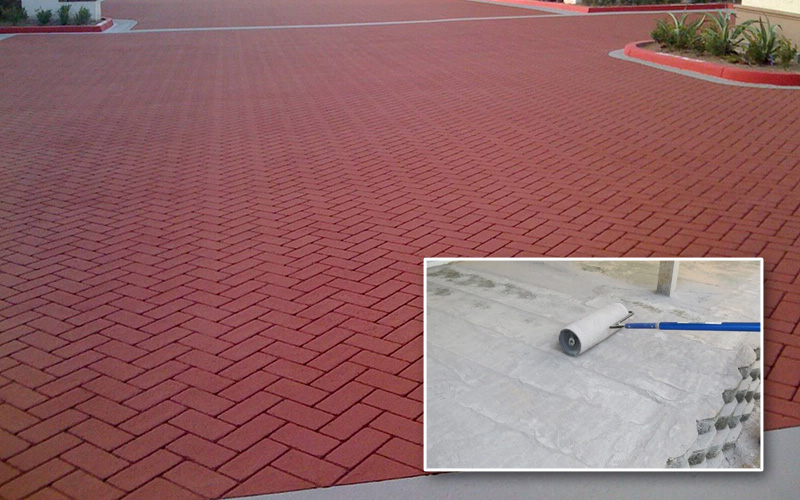
On paper, stamped concrete usually carries the higher upfront price tag. It demands forms, steel reinforcement, thicker slabs, color hardeners or integral pigments, specialty finishes, and careful curing. Stamped asphalt, by comparison, builds on something you already need: asphalt pavement for drive lanes and parking fields. The decorative component is added by heating the surface, imprinting the pattern, and applying a coating system.
Cost on a spreadsheet matters, but disruption is what your tenants and customers feel. That is where stamped asphalt tends to pull ahead. Concrete often needs several days to accept traffic, resulting in entirely blocked entries, rerouted drive aisles, and frustrated visitors. Stamped asphalt installations are typically completed, patterned, coated, and reopened in a much tighter window. For busy properties in the Orlando and Space Coast corridors, the ability to phase work overnight or in short blocks of time can mean the difference between a smooth project and a long-remembered headache.
Durability Under Commercial Traffic
Concrete is strong and rigid. That rigidity is helpful in specific locations, but it also means concrete cracks more rapidly when the base settles, soil moves, or temperature swings introduce stress. On a stamped concrete surface, those cracks cut straight across the pattern. Repairs often stand out, and patchwork can slowly erode the high-end look you paid for.
Stamped asphalt is flexible pavement first and a decorative surface second. It is designed to flex slightly with the base and to tolerate turning movements, braking, and acceleration in high-use areas. That flexibility makes it a natural fit for:
-
Main entrances and internal drive aisles
-
Crosswalks in parking lots and campus roads
-
Traffic-calming zones that still see constant vehicle movement
When something does go wrong – a crack opens, a small area settles, a truck twists the surface – stamped asphalt can be patched, sealed, and re-coated. Because the pattern is pressed into the asphalt, not built from individual units, repairs can blend in far more effectively than in stamped concrete.
Maintenance Rhythms And Budget Planning
Every decorative system needs maintenance. What changes from product to product is whether that maintenance feels like major surgery or routine care. Stamped concrete maintenance focuses on slab sealing, joint repair, and repairs to cracks or spalls that remain visible. Those repairs are necessary, but they often age the installation’s appearance.
Stamped asphalt maintenance feels more like a standard asphalt management plan. On a well-run property, that plan includes:
-
Regular inspections of the decorative zones
-
Early crack sealing instead of waiting for large fractures
-
Localized patching where heavy vehicles turn or stack
-
Periodic re-coating to refresh color and restore UV protection
Instead of tearing out and replacing slabs, you renew the surface while the underlying pavement continues to do its job. For owners across Orange, Seminole, and Osceola counties, that approach spreads costs out more evenly and keeps high-visibility crosswalks and entrances sharp without constant upheaval.
Where Each Surface Makes Sense In East Central Florida
Both stamped asphalt and stamped concrete have a place in a thoughtful site plan. Stamped asphalt tends to shine in the demanding, day-to-day work:
-
Parking lot entries that must reopen quickly
-
Internal roads through commercial parks or campuses
-
Decorative crosswalks that still need to be plowed, swept, and driven by trucks
-
Medians and islands that help calm traffic without becoming trip hazards
Stamped concrete is often reserved for smaller, more controlled areas:
-
Courtyards and plazas with light rolling loads
-
Accent bands are attached to buildings or monument signs
-
Spaces where deeper texture is worth accepting more visible repair lines
Surface King’s stamped asphalt services help commercial clients throughout Greater Orlando and East Florida blend these materials, using stamped asphalt as the primary decorative surface in traffic areas, and concrete or other hardscape in small, strategic zones. The result is a property that looks complete and coordinated, without committing the entire site to a rigid system that is difficult to maintain.

Address
Surface King, LLC
8803 Futures Dr., Suite 2
Orlando, FL 32819-9076
Phone & Fax
Phone: (407) 855-5959
Fax: (888) 389-8173
Office Hours
Weekday: 8 AM – 6 PM
Weekends: By Appointment