
September 6, 2025
Commercial Stamped Asphalt
Why Process Matters More Than Pattern
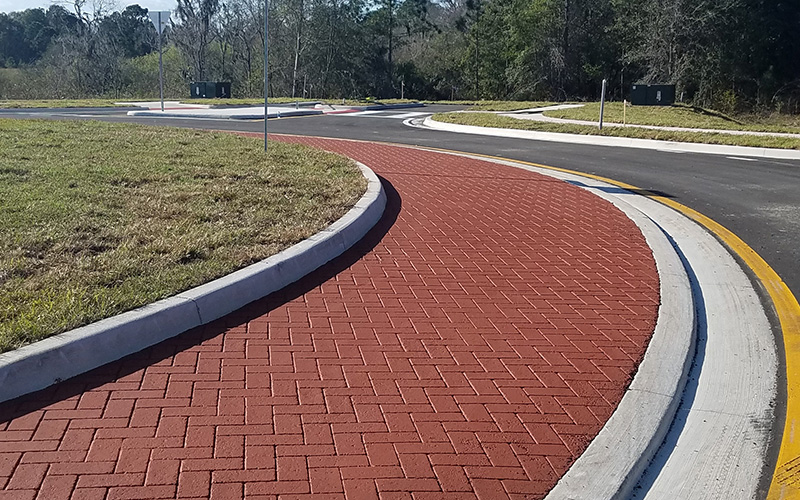
When you walk on a finished stamped asphalt project, you will notice the details on the surface: clean pattern lines, rich color, crisp striping, and smooth transitions into regular asphalt. What you cannot see is the process that made all of that possible. For a commercial property in the Orlando area, the Greater Orlando region, or elsewhere in East Central Florida, that process is what determines whether the surface still looks sharp after years of thunderstorms, heat, and heavy vehicle use.
Surface King treats stamped asphalt as one piece of a broader pavement strategy, not a decorative add-on. The pattern is just the final step in building a surface that has already been designed to perform.
Starting With Pavement Structure And Drainage
Every stamped asphalt project begins with an honest look at the current pavement or the new area to be constructed. Grades, drainage, existing cracking, rutting, and patches all reveal how the pavement is handling load and water. Before any stamping is discussed, the question is simple: Is this structure ready to carry traffic for years to come?
On a typical commercial site, preparation may include:
-
Milling off worn or deformed surface layers
-
Strengthening the base or adding asphalt thickness in stressed areas
-
Correcting drainage so water sheds away from buildings and entrances
New construction goes one step farther, with base design and asphalt thickness tailored to the traffic: one mix and thickness for an office drop-off in Orlando, another for an industrial drive serving regular tractor-trailers in East Florida. By the time the surface is ready for stamping, it should be structurally sound enough to justify the decorative upgrade and connect smoothly with your core asphalt installation work.
Heating The Asphalt To The Right Window
Stamped asphalt depends on heat, but not just any heat. The surface must be warm enough for the pattern to be pressed in cleanly and stay there, yet not so hot that the mix loses stability. That balance changes with temperature, mix design, and even time of day.
On new asphalt, the crew works within a narrow window after final compaction, imprinting patterns while the mat still carries enough heat to move under the templates. On existing asphalt, specialized heaters warm the top layer in a controlled way so only the surface softens. This is delicate work; uneven heating leads to uneven patterns. Experience with local mixes in Greater Orlando and along the Space Coast makes a noticeable difference in the finished imprint’s quality.
Imprinting Patterns With Professional Templates
Once the surface is at the right temperature, the pattern is created using steel or wire-rope templates. These templates are laid out to follow crosswalk alignments, median shapes, and entry lanes, then pressed into the softened asphalt using compactors. When the templates are lifted, the impression remains: regular “joints” that read as brick, stone, tile, or other patterns.
On commercial projects, this is where design and technique come together. Borders can echo building lines or landscape edges. Crosswalks can be painted with a pattern that visually distinguishes them from standard pavement. Entry drives can adopt a more formal pattern that signals to visitors they have arrived at a primary entrance, not a back-of-house service route.
Adding Color, Protection, And Safety
The pattern alone is only half of what makes stamped asphalt effective. Color and protection come from the coating or inlay system applied after imprinting. High-quality coatings and thermoplastic systems are engineered to withstand traffic, ultraviolet light, moisture, and routine cleaning, all while maintaining skid resistance for vehicles and pedestrians.
For properties in Central Florida, that protective layer is critical. It helps shield the pavement from intense sun and heavy rain, reduces surface raveling, and maintains the contrast that makes crosswalks and traffic-calming zones stand out. Surface King’s seal coating and protective treatments can be timed with stamped asphalt installations so everything works as one system.
Striping, Phasing, And Returning To Service
Once coatings have cured, the area is laid out and striped. Parking stalls, arrows, stop bars, ADA symbols, and fire lanes are added or refreshed so the decorative zones tie seamlessly into the rest of the lot. Because Surface King also handles parking lot paving and striping, there is no handoff to a second company and no confusion about who is responsible.
Equally important is how the work is phased. On active properties, nuanced phasing keeps access open, maintains emergency routes, and prevents tenants from being trapped in dead-end parking areas. The goal is simple: when stamped asphalt installation is complete, everyone remembers the improved look and smoother flow, not the disruption.
For commercial properties across Greater Orlando, East Central Florida, and East Florida, a well-planned stamped asphalt installation becomes a long-term asset rather than a one-time project.

Address
Surface King, LLC
8803 Futures Dr., Suite 2
Orlando, FL 32819-9076
Phone & Fax
Phone: (407) 855-5959
Fax: (888) 389-8173
Office Hours
Weekday: 8 AM – 6 PM
Weekends: By Appointment